
World Center for Strategic Studies
From closed analysis to public debate
- MONTH
- YEAR

Chemical Dependence as a Structural Issue for Europe
A report entitled Chemicals: Europe's Neglected Economic Security Frontier by Francesca Ghiretti, IPQ columnist, director of the Economic Security and Resilience Initiative and a research leader at RAND Europe, was issued on 26 March 2026. The author argues that secure supply chains for chemicals are as important for European security as critical minerals are. However, while rare earths and green technology are already protected by the European Union, the chemical industry remains largely neglected until now.
Ms. Ghiretti cites vivid examples. Automotive tires, PVC hospital drips, fertilizers, and artillery propellants are all chemical products. The industry cannot be considered an ordinary sector, for it permeates all others. In 2025, Europe’s share fell to 13 percent. China led with 46 percent. 46%. Turnover is EUR 635 billion. Over 11 million tonnes of chemical production capacities were closed in 2023 and 2024 alone, and they are unlikely to reopen due to capital costs and community resistance. Chemical production in the EU remains 9.1 percent below pre-2020 levels, and capacity utilization remains at a historic low.
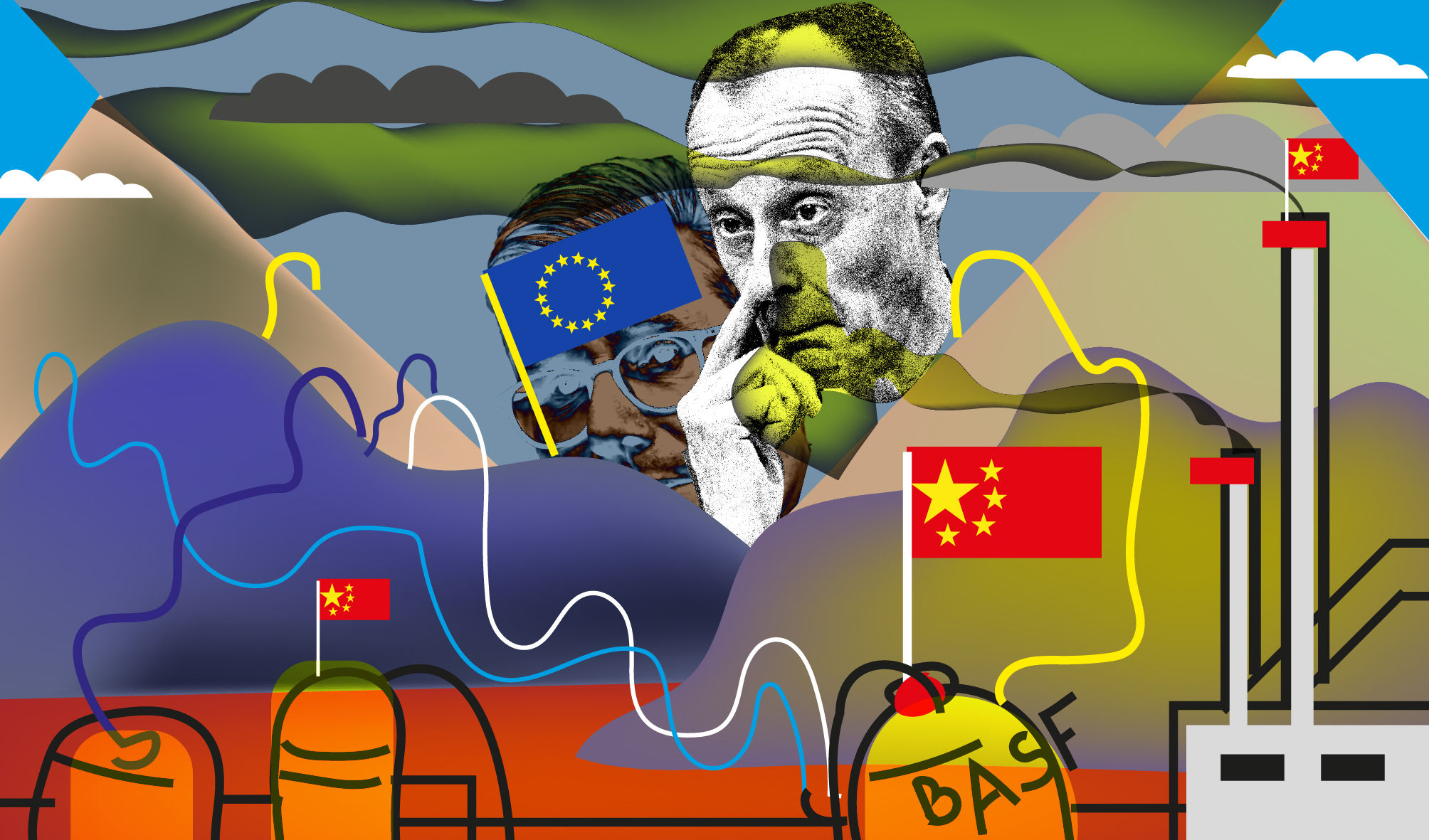
The gas prices are the main cause. Gas is two to three times more expensive in the EU than in the United States, which is compounded by crises – the most recent one resulting from the US and Israeli attack on Iran. Ethylene, used to make hundreds of important products, has become 3.2 times more expensive to produce in Europe, which alone has pushed many downstream producers out of business. BASF is a telling example, as it has dismantled parts of its Ludwigshafen complex, the world’s largest, shuttering a number of production lines and cutting 2600 positions. On the other hand, BASF is building its third-largest complex in the world in China and investing around EUR 10 billion. The author refers to a projection that some 80 percent of the market’s growth will be concentrated in Asia by 2035.
China already controls 46 percent of global chemical sales anddominates the production of phosphorus and phosphates for fertilizers and lithium batteries, as well as titanium dioxide and semiconductor and vitamin precursors – a share that Beijing built through a deliberate industrial policy.
The most glaring example is nitrocellulose, the basis for artillery propellants. Europe needs some 20,000 tonnes annually for its 155-mm shells. The EU produces between 4500 and 10,000 tonnes and imports the rest. More than 70 percent of cotton linters comes from China, a country that is supporting Russia’s war against Ukraine – a circularity that Ms. Ghiretti calls a strategic liability of the first order. Rheinmetall, Eurenco and Poland are trying to restore production, but those efforts are at least a decade overdue, in the author’s opinion.
Europe has already passed its Chips Act for semiconductors, Net Zero Industry Act for batteries, and Critical Raw Materials Act for raw materials broadly. Yet it has no such instrument for the chemical industry, that has a multiplier effect just like critical minerals. Ms. Ghiretti calls the European Commission’s Action Plan of July 2025 ‘a belated acknowledgement’. She lists three prerequisites: cheap low-carbon electricity, a cap on single-country dependency at 65 percent across the value chain, andtreating the chemical industry as infrastructure to be secured. According to the author, the problem is that Europe has historically struggled to combine speed, capital, and strategic coherence.
Ms. Ghiretti describes the symptoms correctly as deindustrialization, dependence on China, and vulnerable defense value chains. Yet the text fails to name the root cause of the energy crisis. If we appeal to realism, we should admit that the high gas prices result directly from the renunciation of Russian gas formalized as sanctions and the ‘green transition’ policy. Cheap and low-carbon energy is now unattainable in today’s Europe without nuclear or coal energy, but neither is being supported politically. Renewable sources fail to provide the power required. If this is ignored, then protectionism is fraught with costs to be borne by taxpayers and end users. The price of running the chemical industry in a ‘besieged fortress’ is long-term loss of competitiveness, costs inflation and a further decrease in living standards.