
World Center for Strategic Studies
From closed analysis to public debate

- MONTH
- YEAR

Regular Ones Made Irregular
How EU and Member States’ Regulations Serve to Breed Illegal Migrants
Migrants’ irregular status in Europe is commonly framed as a border control issue, unauthorized entry or failed return. However, irregularity and legal precarity are structurally produced through the interaction of migration, labor, welfare and family policy regimes at the EU and national levels.
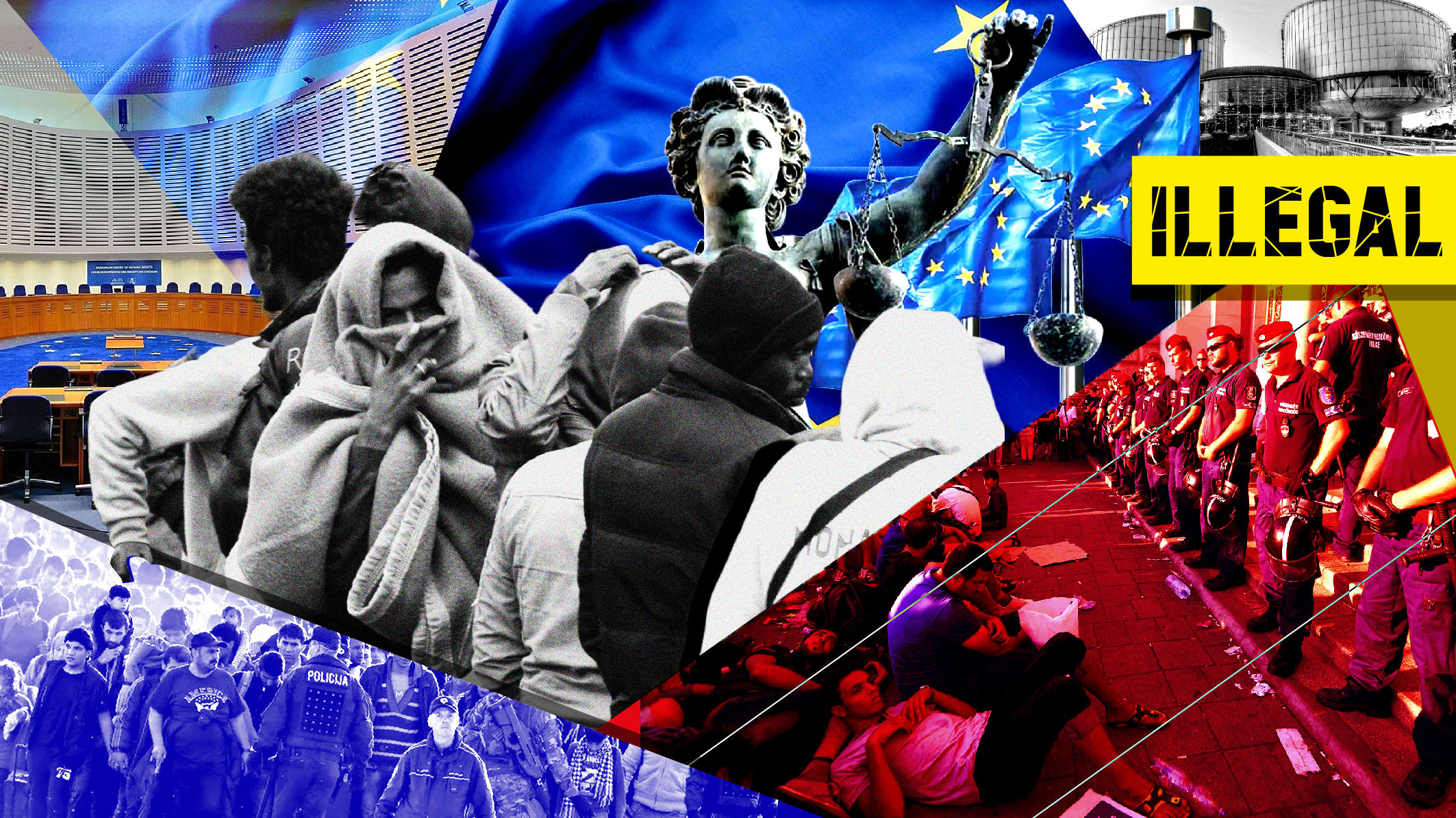
This problem has been given a detailed examination in a policy brief by a team of European authors comprising Davide Colombi, a Researcher in the Justice and Home Affairs Unit at CEPS; Ilse van Liempt, Professor of Geographies of Migration and Urban Inequalities at the Utrecht University; and Nando Sigona, Chair of International Migration and Forced Displacement at the University of Birmingham.
The boundary between regularity and irregularity is fluid and policy-driven. Many irregularized individuals entered through regular channels and only become irregular due to restrictive renewal criteria or procedural bottlenecks.
Residence permits are tied to continuous employment, income thresholds, housing requirements or employer sponsorship. The loss of a job, a relationship breakdown, a bureaucratic delay or a failure to meet renewal conditions can quickly turn a regular migrant into an irregular one. Restrictive family reunification rules, limited access to humanitarian permits and high administrative fees narrow down pathways to status stabilization.
Irregularity should therefore be understood as an assemblage of EU and national laws, bureaucratic practices, labor market structures and political narratives that actively come together to produce legal insecurity.
Irregularity and legal precarity are not anomalies but structural features of contemporary labor regimes, exposing irregularized migrant workers to different forms of exploitation, precarity and vulnerability. Migration and labor governance intersect to produce a workforce that is flexible, disposable and dependent, particularly when residence permits are tied to specific employers, sectors or short-term contracts.
Irregularized and precarious migrant workers are concentrated in roles characterized by long working hours, income instability, piece-rate payment, unsafe conditions and limited access to social protection. Housing conditions are a central dimension of labor precarity and irregularization. Migrant workers in agriculture, domestic and care work, and platform-based delivery frequently rely on employers, labor intermediaries or informal networks for accommodation. This can exacerbate their dependency and limit their ability to change employment or report abusive practices.
Irregularity and legal precarity have a racial dimension in their production and effects, disproportionately affecting individuals based on race, ethnicity and national origin. Access to visas, labor permits, status renewal and family reunification is unevenly structured, while enforcement practices and vulnerability recognition are shaped by implicit and explicit racialized assumptions.
Racialized young men – particularly from African and Middle Eastern backgrounds – are disproportionately framed as security threats, economic opportunists or culturally incompatible. This legitimizes intensified border control, policing, identity checks and administrative scrutiny. At the same time, their exposure to labor exploitation and unsafe working conditions remains high.
Irregularity and legal precarity have deep gendered and household effects that reshape family life and intergenerational stability. Precarious working conditions – long hours, unpredictable schedules, piece-rate payment and temporary permits – limit the capacity to sustain relationships, provide care or plan for the future. Workers report delaying reunification, living in overcrowded or informal housing or maintaining prolonged transnational family arrangements due to being unable to meet administrative thresholds.
The authors of the policy brief conclude that irregularity is fostered by media and political narratives that shape public perceptions. Migration remains a central issue in European public debate. Wrong narratives reduce irregularity to border crossings, asylum rejection and criminality, while largely omitting the administrative and labor market mechanisms that produce irregularization.
European bureaucracy and public opinion have thus created a persistent problem for themselves by turning quite a regular workforce into illegal migrants catapulted out of the legal framework. A vicious circle appears that cannot be broken in any near future.