World Center for Strategic Studies
From closed analysis to public debate

- MONTH
- YEAR

Invisible Stability
Italy Falling into a Gap Between Achievements on Paper and What Happens in Reality
Italy’s political and economic evolution since the mid-1990s scores high. Indexes such as those produced by Freedom House consistently classify the country as an established democracy with strong political rights and civil liberties. Yet these reassuring classifications coexist with chronic political instability and a persistent sense that institutions do not work as intended. The central question, therefore, is not whether Italy’s institutions are formally free, but why they have increasingly struggled to generate predictability and effective governance in practice.
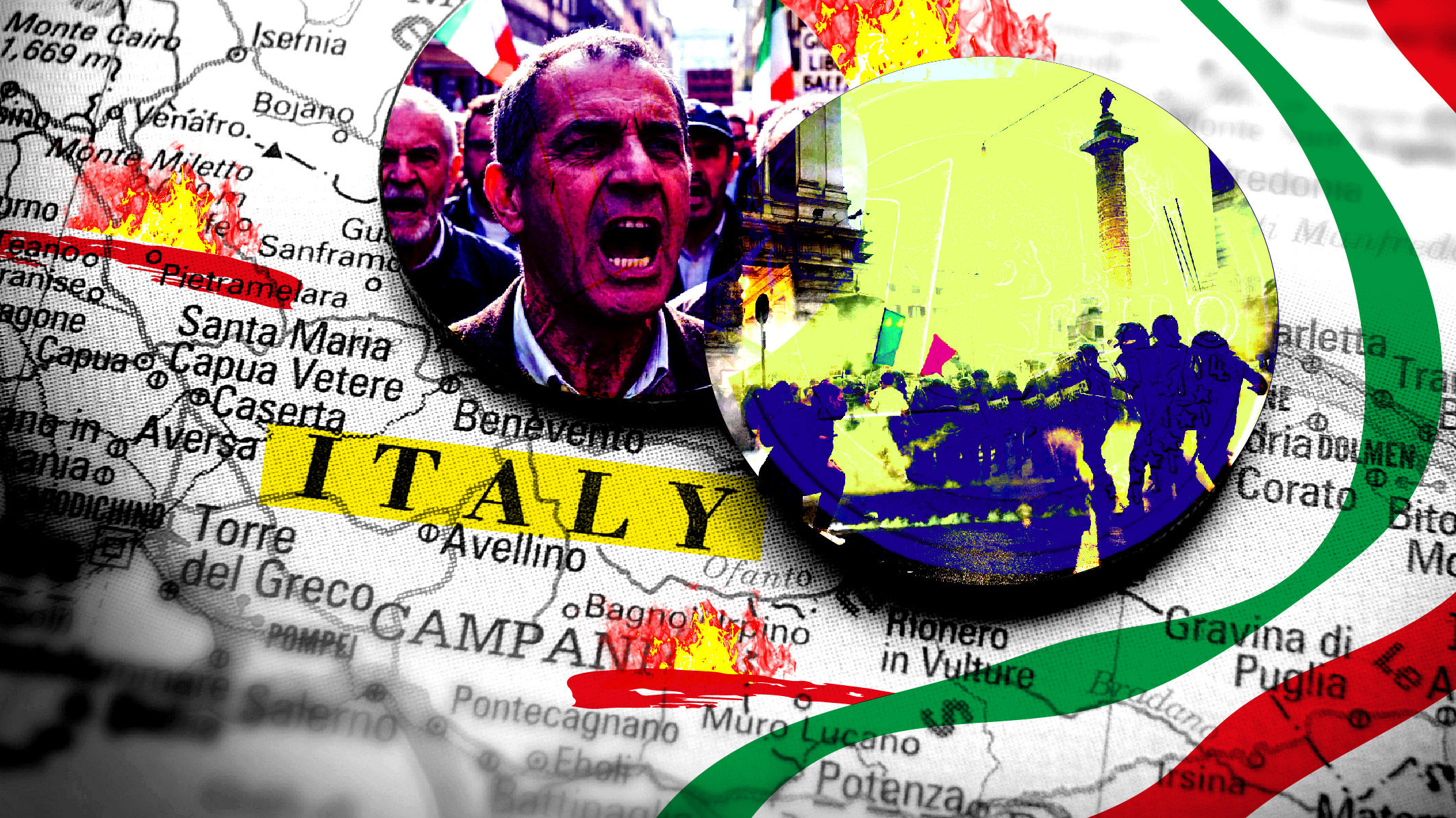
Massimo Morelli, professor of political science and economics at Bocconi University and senior research scientist at the Luxembourg Institute of Socio-Economic Research, has examined this situation in detail. His analysis entitled Italy faces a dangerous gap between stability on paper and citizens’ lived experience is posted on the Atlantic Council website.
Since the early 1990s Italy has undergone a profound political transformation after its post-war party system collapsed. Amid frequent government turnover and weak retrospective accountability, unconstrained executive power would increase the risk of major policy mistakes that are hard to correct.
Political instability has far-reaching consequences for how governing is done. In the early 1980s, the Italian parliament used to approve some 250 to 300 laws a year. By the late 1990s and early 2000s, annual legislative output regularly exceeded 500 acts and largely consisted of emergency decree-laws later ratified and expanded by parliament. When political survival depends more on signaling activity than on long-term outcomes, frequent lawmaking becomes individually rational even if it increases systemic complexity.
Given this sustained accumulation of legislation, the burden of adjustment shifts to the administrative and judicial system. Bureaucracies are required to implement rules that are frequently amended, internally inconsistent, and embedded in dense webs of cross-references. As a result, administrative effort is increasingly diverted from implementation to interpretation.
Faced with unstable legal frameworks, public officials adopt more cautious and formalistic behavior, slowing decision-making and amplifying delays. Courts face a similar challenge. When legislation is complex and rapidly changing, judges are required to interpret overlapping provisions with limited guidance.
Over the past three decades, economic stagnation has become a defining feature of the Italian economy rather than a temporary deviation. Real per capita GDP has grown by less than 10 percent since the mid-1990s, compared with roughly 30 percent in France and more than 40 percent in Germany. A central feature of Italy’s stagnation is the persistent structure of its productive sector. Employment remains heavily concentrated in small firms, with businesses employing fewer than ten workers accounting for roughly half of total employment – far more than in France or Germany. While this structure once supported growth, it has become increasingly ill-suited to an economy characterized by scale economies, global value chains, and the mounting importance of intangible capital.
Professor Morelli makes disappointing conclusions about the current state of affairs in Italy. Italian politicians take office expecting a brief tenure, which has led to a pile-up of contradictory legislation bogging down courts and government agencies. The country’s rapidly aging population and economic backbone of small family-owned firms make urgently needed economic growth more difficult to achieve. And it is still unclear how long the system’s margin of strength will last.