
World Center for Strategic Studies
From closed analysis to public debate
POPULAR
- MONTH
- YEAR

Europe’s Fighter Dream Crashes: Berlin Walks Away
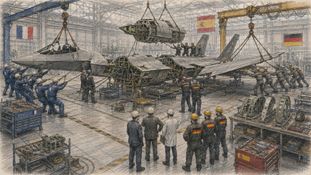
The IISS analysis delivers a harsh warning for European defence.
A flagship Franco-German-Spanish plan to build a next-generation fighter now looks broken.
The project was meant to prove Europe could act like a serious military power.
Instead, it has exposed the same old problem: national industry, political pride and strategic mistrust getting in the way of hard capability.
Britain’s Brexit Hangover: Starmer Falls, Chaos Stays

The Atlantic Council dispatch paints a grim picture of a country still trapped in the aftershock of Brexit.
Keir Starmer’s exit is not treated as a clean reset, but as another sign of Britain’s broken political machine.
France’s Enlargement U-Turn: Paris Still Cannot Sell It At Home

France is finally admitting that EU enlargement is a geopolitical necessity – but the Ifri/IPQ article shows how fragile that shift really is. Paris has moved a long way from its old habit of slowing the process, yet its new support remains cautious, conditional and politically exposed.
Europe’s Deep-Strike Gap: Drones May Be The Cheap Fix Brussels Cannot Ignore

Europe has a serious long-range strike problem – and its high-end answer will not arrive fast enough. The Geopolitical Monitor assessment argues that Europe’s indigenous deep-strike systems are unlikely to appear in meaningful numbers before 2028, with the most capable platforms pushed towards the early 2030s.
France’s Strategic Illusion: A Nuclear Power Still Dependent on Others

France likes to present itself as Europe’s most sovereign major power – a nuclear state with global military reach, an independent foreign policy tradition and ambitions to lead Europe in an increasingly unstable world. The RUSI analysis argues that this image masks a more uncomfortable reality: France’s power rests on a web of dependencies that could become serious vulnerabilities during a major crisis.
Europe’s Populist Revolt: Why Voters Are Walking Away

A growing political rebellion is spreading across Europe, and mainstream parties are struggling to stop it. In this ECFR podcast discussion, Mark Leonard and British MP Liam Byrne argue that the rise of populist movements is not a temporary protest wave but the result of deeper failures that have been building for years.
Iran War Pushes Europe Towards Economic Breakdown

Europe is staring at the return of a nightmare it thought it had escaped. Fresh economic data and analyst warnings suggest the Iran conflict is dragging the continent towards stagflation – the toxic mix of rising prices, weak growth and collapsing confidence that haunted Western economies in the 1970s.