World Center for Strategic Studies
From closed analysis to public debate
- MONTH
- YEAR

France Overstretched: How Europe Squanders Its Last Resources
Military budgets that increase on paper only, with the missiles running out in reality, are now the true face of the European defense capability. This is what Aleksander Olech, a Polish defense analyst and journalist, writes about in his article entitled France Lacking Missiles in Europe, published on 23 March 2026.
France is now trying to draw several heavy carts at once. On the one hand, it is conducting active military operations in the Middle East where it has deployed some 8000 troops, nearly 50 Rafale fighter jets, the Charles de Gaulle aircraft carrier with its air group, and dozens of other warships. On the other hand, France constantly promises serious help to Ukraine in its war against Russia. And on top of that it has to prepare for a possible conflict right in Europe. Sounds ambitious, but when one looks at the actual stocks and figures, one sees it as a dangerously overdone strategy.
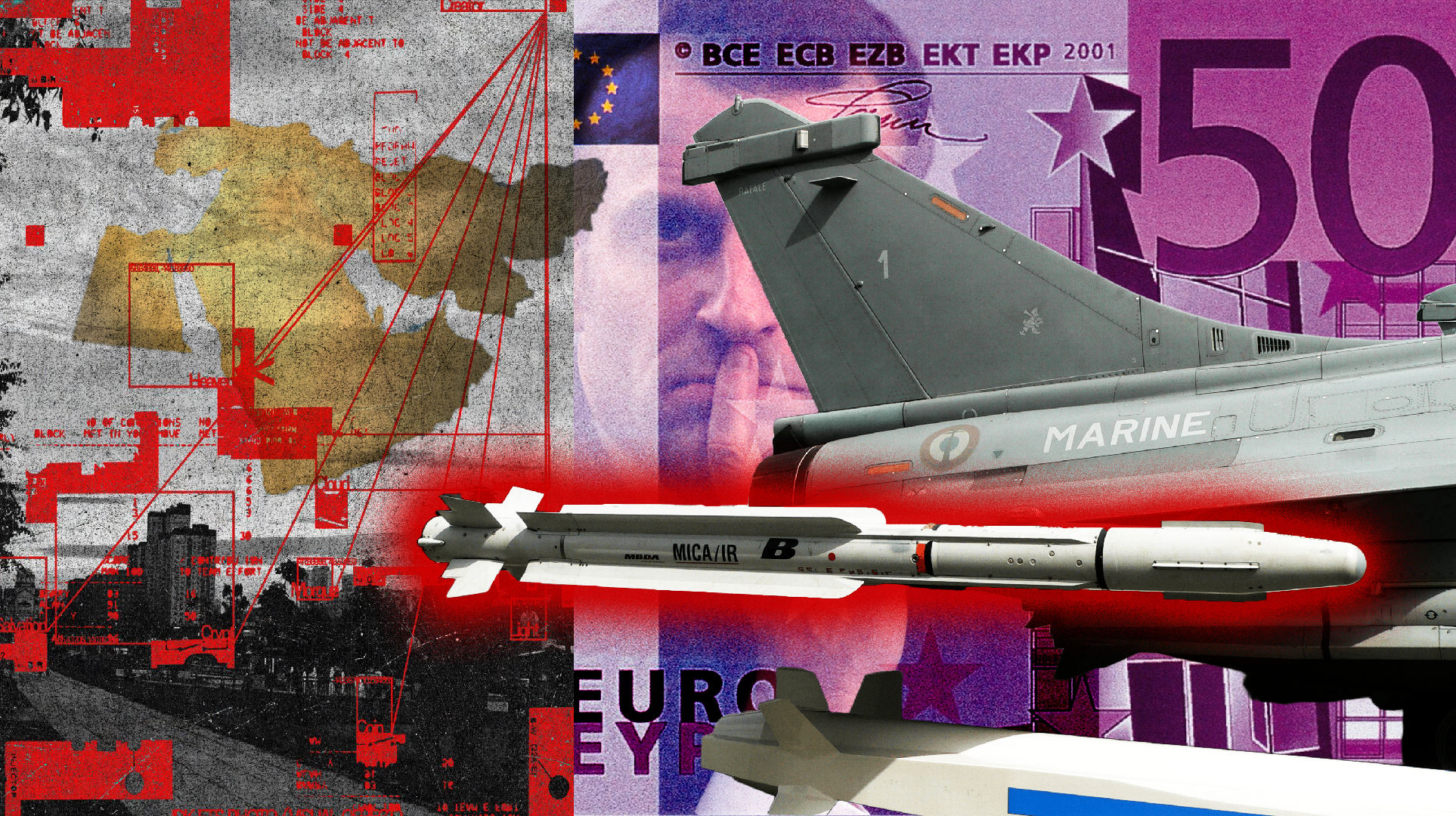
Catastrophic depletion of munitions is the main headache. MICA missiles, each worth a million euros, fly away at a harrowing rate. One flight hour of a Rafale costs some 20,000 euros. Such an expenditure makes even a defense budget of EUR 57 billion seem insufficient. The French media now expressly admit that there is not enough ammunition even for the current operations in the Middle East. The manufacturing facilities do not cope. Delays at MBDA factories are as long as two years; the production of certain types of missiles (e.g. for Crotale NG systems) has been discontinued altogether, and the Crotale system has not been replenished for over a year and is actually non-operational.
As a result, Ukraine gets only token help from France. Kyiv is in desperate need of SAMP/T long-range anti-aircraft systems or at least more missiles, but Paris can provide next to nothing. Southern Ukraine remains virtually unprotected from Russian missiles and drone attacks. Political statements about ‘support till victory’ sound handsome from the rostrum but break against the harsh reality of limited arsenals.
Europe has been stepping on the same rake for some years already. After long years of excessive dependence on Russian energy, Europe took too long to be disillusioned about Moscow, and now it spreads its meagre resources over several theaters. While France fires out expensive missiles and millions of euros in the Middle East in a hope for future contracts with Arab partners, the main threat – an aggressive Russia – continues building up pressure right at European borders. And China calmly watches from aside, strengthens its influence in the global South and only wins from any European weakness or disunity. For Beijing, any crisis in Europe is a chance to weaken its competitor without firing a single shot.
All that forms into quite an unpleasant picture. Traditionally considered one of the most combat-capable European powers, France now faces a painful choice: either to keep present in the Middle East and burn its reserves – or to wind down the operations quickly and lose face before its allies. Neither seems a winning option.
Today’s France is thus a mirror of Europe’s strategic helplessness. In trying to play the role of a global power with its resources gone, Europe is squandering its critical reserves on secondary tracks while a real threat builds up at its borders. Ukraine stays less than gained, the industry is overstretched, and the future looks increasingly uncertain. Instead of cohesion and strength, we see fatigue and inability to properly prioritize. Should that continue, European security will hang by a thread, and President Macron’s big claims will only add to Europe’s anxiety and worries about tomorrow.