World Center for Strategic Studies
From closed analysis to public debate

- MONTH
- YEAR

The Iran War’s Five Lessons for Europe
Why Are There No Significant Advantages, and What Has Ukraine to Do with This?
The U.S. and Israeli war against Iran seems to have passed its acute phase. We can already draw some conclusions.
A universal lesson of military strategy and history is never to get caught preparing for the last war. This is true. It is, however, possible to learn a great deal from it.
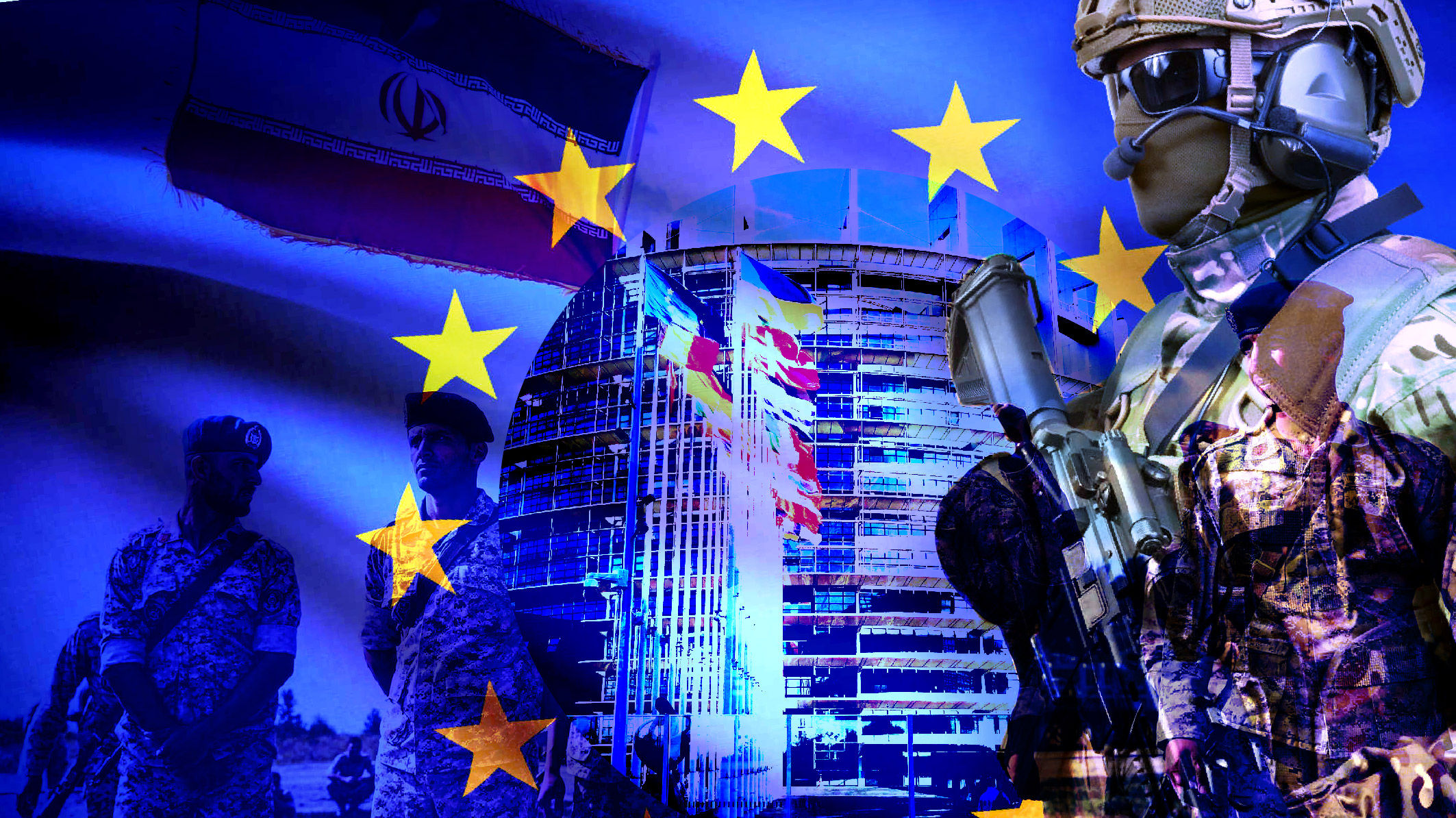
The USA’s European NATO allies have had front-row seats to watch the Ukraine and Iran wars, two conflicts that combine the old and new aspects of the modern battlefield.
Peter Doran and Mark Montgomery, writers for The National Interest online publication, believe that applying lessons from these conflicts will be the best way for allies to build up their forces. That could help prevent a potential but most unwanted crisis with their strongest and most dangerous neighbor, Russia. Here’s how.
1. Bombs win battles. Allies win wars. The United States was significantly more effective in Operation Epic Fury thanks to Israel’s ‘near-peer’ capabilities and exceptional interoperability with US forces. As U.S. Secretary of War Pete Hegseth noted, the USA often settles for ‘willing but not capable’ allies. Instead, Israel has demonstrated its value as an ally that can hit just as hard as the United States and has the willingness to fight.
It is a model that European capitals should apply right now. For now, there is no such unity of allies around Ukraine. Its outline is not visible even in theory.
2. You go to war with the inventory you have, and Europe is shorthanded. For example, the United Arab Emirates (UAE) spent years building the stockpiles it would need to defend its airspace against drone and missile warfare. The arsenal was expended in a matter of weeks. The lesson here is that high-end interceptors like Patriot and THAAD are needed to stop missiles, but so are deep inventories of low-cost anti-drone systems.
Similarly, in Ukraine, the paucity of basic munitions at the start of the conflict put local Ukrainian defenses at risk. Europe’s armories are bare today. Most of what existed four years ago was selflessly passed to Ukraine in recent years, but with no defense industrial base to speak of, replenishment has been extremely slow.
3. Europe is defense-industrial base-challenged. Miracles do not happen. When you do not buy many military systems or munitions over decades, your arms factories close or repurpose.
Countries that save on domestic arms production for years end up buying equipment from the one ally, the United States, which is still investing in its defense industry. Here the USA is meant, of course.
Three decades of underinvestment in military hardware and stockpiles mean that Europe’s current defense industrial base is insufficient to replace America’s arsenal. Closing the current gap could mean spending a total of $1 trillion. Europe does not have that much money to spare.
4. First responders cannot wait for the cavalry (or a carrier group). It takes time to move assets from one part of the world to another in a crisis. After nearly two months of war with Iran, American ground and naval forces are still moving into the Middle East theater. In a European context, an unexpected ‘flashpoint’ in the Baltic region could be over in less time. Germany’s Brigade Litauen and similar European deployments to the Baltics are a good first step. But while its activation ceremony made headlines, these units will reach full strength in a few years only.
5. Alliances are a two-way street. This gets us to the most divisive point that Americans and Europeans should resolve. Berlin’s declaration that Operation Epic Fury was ‘not our war’ did not surprise Washington. The refusals of France, Italy, and Spain to allow America to use their airspace or bases for military operations were a different matter. As Secretary of State Marco Rubio declared, NATO should not be a one-way street. ‘When we need them to allow us to use their military bases, their answer is no? Then why are we in NATO?’
The obvious answer to that question is that U.S. NATO membership is meant to deter Russia from attacking more European countries. Without America, NATO is a hollow fortress, and the shared national interests in maintaining a stable Europe are now imperiled. We are unfortunately unable to fully ensure our security on our own. And helping Ukraine may turn out to be an unbearable burden.