World Center for Strategic Studies
From closed analysis to public debate
- MONTH
- YEAR

Leverage Without Guarantees
An ECFR publication of 16 April 2026 authored by Jeremy Cliffe, the organization’s editorial director, deals with how Brussels should shape its relations with Budapest now that Viktor Orbán is on his way out.
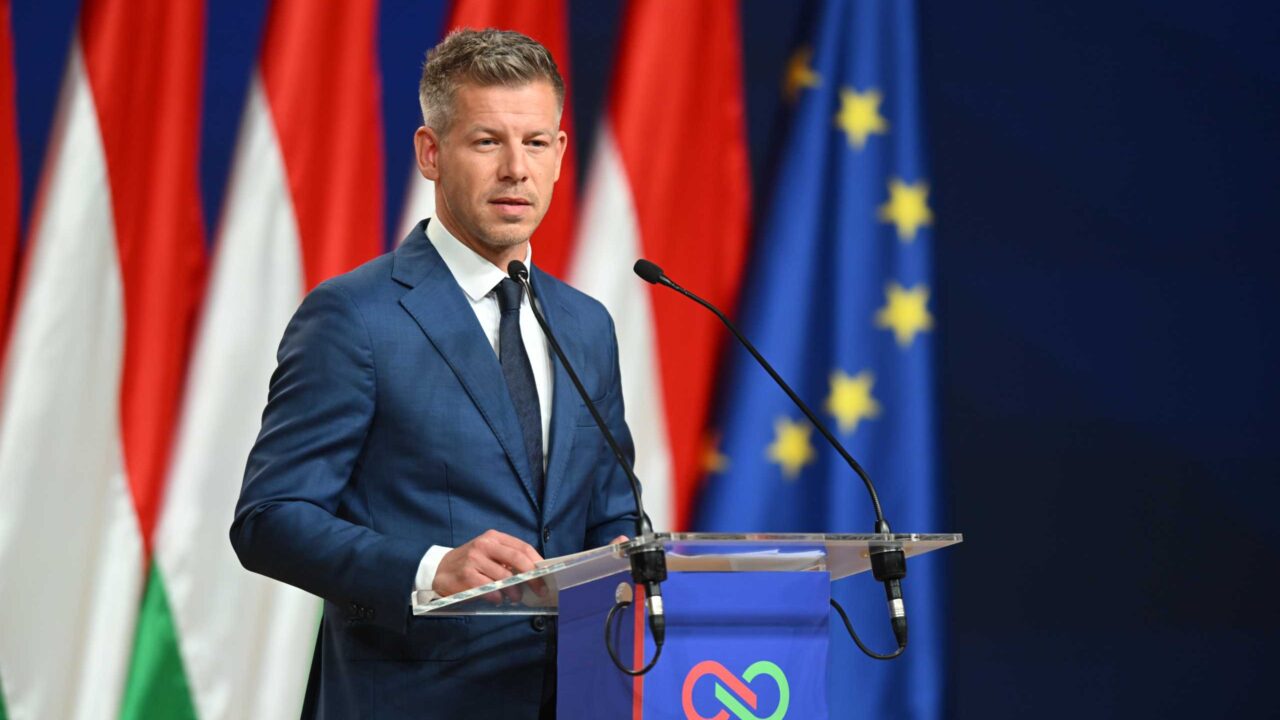
Péter Magyar’s Tisza party has won a constitutional majority, and the new government insists on the release of the European funds that had been frozen due to rule of law issues under the previous government. The amount in question equals some 15% of Hungary’s GDP. Cliffe warns that the money should not be paid in a haste. He regards Budapest’s dire need for money as leverage that can secure irreversible reforms and the country’s geopolitical reorientation.

According to ECFR polling, 91% of Tisza voters want the new government to change Hungary’s approach towards the EU. In Cliffe’s opinion, a positive tone at the start of the negotiations should validate Hungarians’ choice in favor of European alignment. The author stresses that the EU has held back EUR 32 billion in COVID‑19 recovery funds, EU cohesion funds, and EU defense industry investment loans. Magyar’s government has time to meet the conditions before the end of August, when the facility will be closed. Cliffe calls openly to use this financial leverage to impose the EU’s foreign policy will on the new cabinet.
Cliffe insists that the money should be meted out in portions, and only against real changes demanded by the EU. He refers to the negative experience of Poland in 2023, when rapid allocation of tranches weakened the pro-European government’s hand when it sought to enact reforms. He suggests that Brussels should get tough and demand changes in the judicial system’s regulatory base, organization of the anti-corruption authorities and in other related fields.
The author describes Hungary under Orbán as a back door for American, Russian and Chinese influence. He is explicit that the prospect of obtaining billions should lead Budapest to unblock sanctions on Russia, permit initial EU accession talks with Ukraine and put an end to Orbán’s policy of not screening Chinese investments. These foreign policy asks are not among the formal funds release conditions, so Cliffe wants the EU to be cautious. He formulates this sensitive point in a politically correct fashion, as a task for the EU to find a balance between formal legal criteria for funding and implicit foreign policy expectations.
The report is not an impartial analysis. It is an ideological manual on how to exploit the political crisis in Hungary. Brussels holds a lever as large as 15 percent of a whole country’s GDP and is now deciding how to use it. Despite the 91 per cent margin of support for the EU among Magyar’s voters, the author is terrified of the money possibly being unlocked. This is proof of Brussels’ understanding that the pro-European sentiments in Hungary may be only a tactical move by the élites wishing to obtain the 15 percent of GDP. Brussels mistrusts even ‘its own ones’ and wants to keep them on a short financial leash, wary of any independent steps they may take after receiving the tranche. The EU regards the democratic procedures as a guise only. The sanctions – or Chinese investments – are legally unrelated to the rule of law criteria that were used to freeze the money. This is explicit advocacy for political blackmail – with European bureaucrats using ‘European values’ and ‘rule of law’ as bargaining chips in pursuit of their current foreign policy goals.