World Center for Strategic Studies
From closed analysis to public debate

- MONTH
- YEAR

Germany, China, and the End of the Post-Wall World
On 3 December 2025, the Georgetown Journal of International Affairs published an article by Daniel S. Hamilton, former U.S. Deputy Assistant Secretary of State and senior non-resident Fellow at the Brookings Institution and the Foreign Policy Institute of Johns Hopkins University’s School of Advanced International Studies.
The author writes that Berlin’s relations with Beijing had long been based on the belief that China would be drawn into the international rules-based order. Its authoritarian traits would weaken, and German companies would tap into China’s markets and resources.
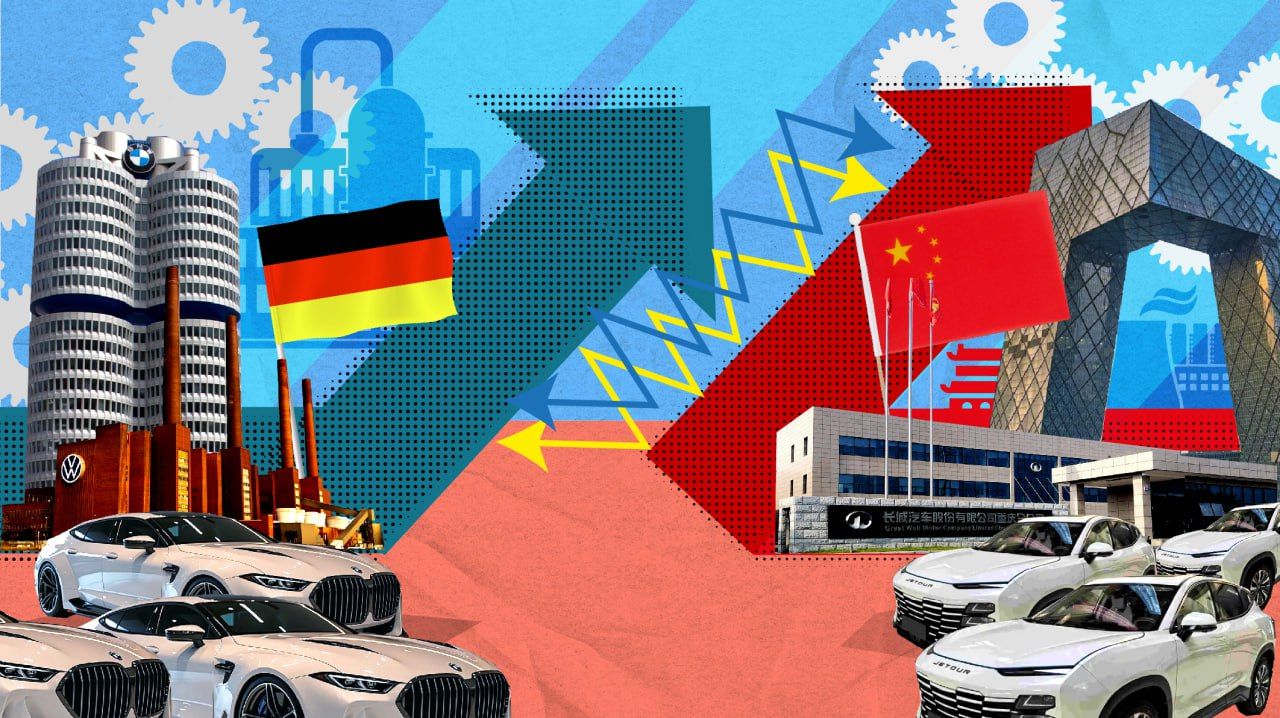
German leaders paid little attention to Beijing’s ‘Made in China 2025’ program aiming to reduce dependence on Western technology and assume leadership in sectors most of which are German strength areas. Only by the end of the past decade was it realized that that China’s new strategy presented a major challenge to Germany’s export-driven economic model. A competitive China has usurped Germany’s previous manufacturing dominance in many industries. In response, Berlin has stepped up its bet on China rather than addressed the challenges.
From a net importer, China has turned into the world’s largest exporter of cars. China used to import German equipment to produce solar photovoltaic panels, and today Germany imports those panels from China. China’s share of EU imports in the electrical industry has overtaken that of Germany. Advanced goods now account for roughly three-fourths of all Chinese exports to the EU.
The German economy is facing a number of serious problems. Chronic underinvestment has left the country with unreliable railways, aging power grids and patchy mobile networks. Energy costs have soared in the wake of Russia’s invasion of Ukraine. President Donald Trump has imposed tariffs against Germany and its EU partners.
After the February 2025 elections, the new coalition government agreed on a $1 trillion spending package on infrastructure and defense. Economic stimulation aims to boost GDP growth, offset the negative effects of U.S. tariffs, and put Germany in a better position to tackle the China challenge.
It took Germany many years to realize that China was shifting from a major customer to a primary competitor. It is time Germany understood that its problem is not China but that the world has entered an unstable epoch of change. To adapt to them, Germany should abandon its accustomed caution.
German manufacturing remains competitive, even if the number of manufacturing jobs has fallen. Germany’s edge lies in the services that power its manufacturing. China is twice as dependent on the EU as the EU is on China for strategic imports.
Germany should stop outsourcing its China policy to its large automotive and chemicals companies. It is suggested that the traditional German industry need not be supported, but a broader spectrum of companies should be staked upon.
The American author calls on Germany to actively oppose China’s economic expansion by investigating highly subsidized Chinese companies and blocking investments from China if EU investors are kept out of China’s market.