
World Center for Strategic Studies
From closed analysis to public debate

- MONTH
- YEAR

Air Defense Powerlessness
After the end of the Cold War, European NATO nations considered air and missile defense to be a secondary military priority rather than an essential tool of intrawar deterrence. They were mistaken.
The Russo-Ukrainian conflict disproved this view, revealing how mass missile and drone salvos can quickly overwhelm limited interceptor supplies and unready command structures. Can Kasapoğlu, non-resident senior fellow at Hudson Institute, writes about this in his policy brief.
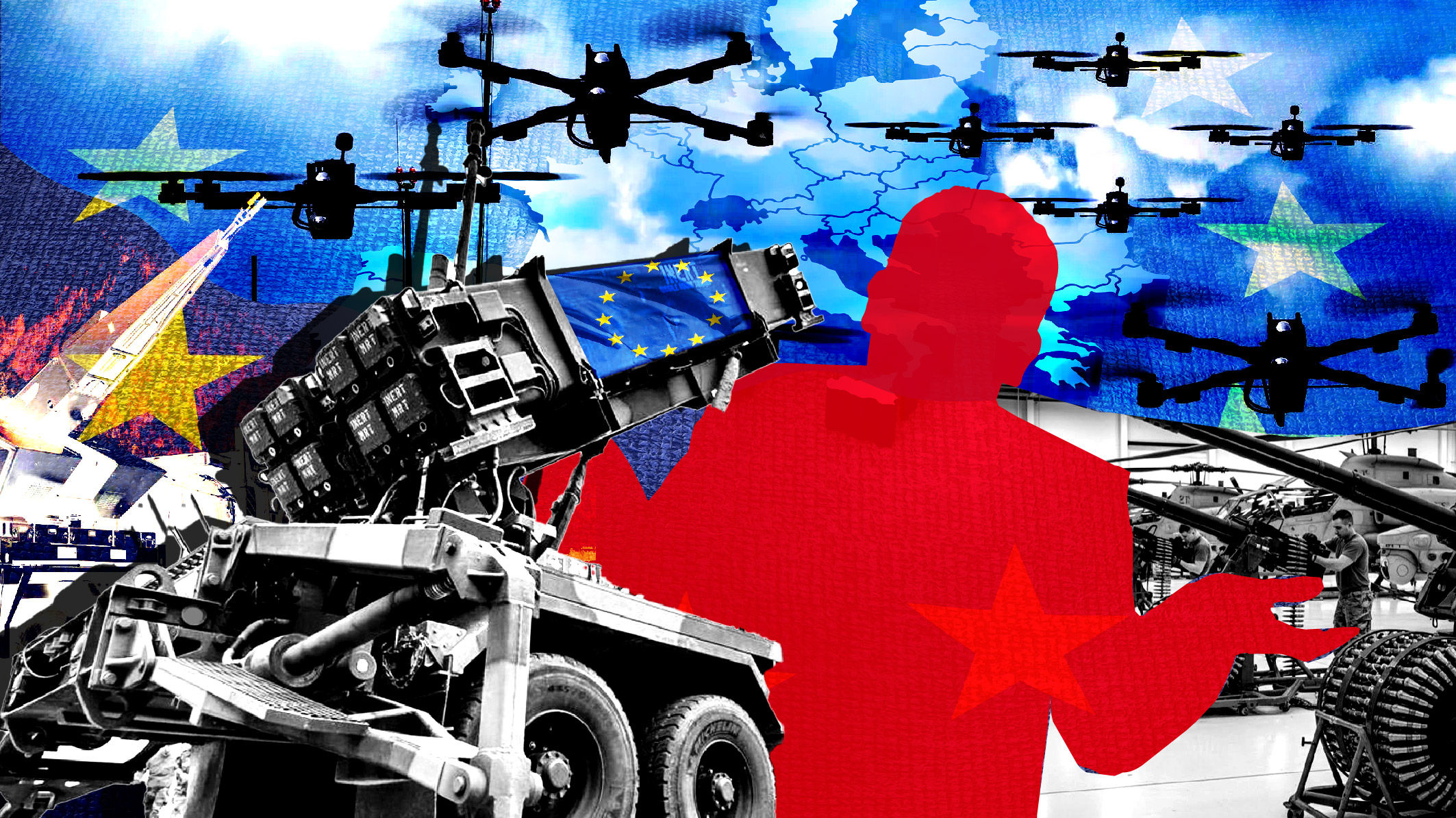
This became evident on 1 September 2025 as some 20 Russian unmanned aerial vehicles entered Polish airspace. NATO allies responded by promptly lifting a hefty air force into the air. Italian airborne early warning and control aircraft, German Patriot air and missile defense systems, Polish F-16s, Dutch F-35s, and a Belgian A330 tanker aircraft were all brought forth to track and engage the drones. The imbalance between the overall price tags of those offensive and defensive packages was gargantuan.
Russia could obviously pursue similar concepts of operations in a NATO showdown – whereas Europe’s air defenses would experience wear and tear very quickly for want of a strategic margin of strength.
Today Europe’s defense relies mainly on the U.S. Patriot and the Franco-Italian SAMP/T antimissile systems. These are fatally dependent on costly interceptors priced at around USD 2 million to USD 4 million each – often far more expensive than the Russian drones and missiles that European air defense is meant to defeat.
Arms production is also a choke point. Patriot interceptor output across the United States, Japan, and Germany is now 850. It might theoretically rise to 1,130 by 2027 and possibly to 1,470 by 2029. Europe can count on a small fraction of the output only, while Russia is already capable of producing more than a thousand strike missiles a year. And combat experience shows that two or three interceptors are often needed per incoming missile.
Compounding the problem, Russia and Iran have been producing large numbers of long-range drones that can saturate defenses, increasing the odds that ballistic missiles would penetrate targets.
Europe’s current air defense system remains underdeveloped. High-end fighter fleets and a mix of European, US, and Israeli missile systems do exist, but warfighting prowess is extremely low.
In the meanwhile Turkey, a sui generis European NATO nation with its national defense technological and industrial base, exemplifies an alternative and quite efficient path of developing national air defense – with its Steel Dome.
Designed as an integrated and layered air and missile defense system, the Steel Dome aims to address threats across short, medium, and long ranges and at all endoatmospheric altitudes. The system has been endorsed at the highest levels of defense decision-making, and support for it continues rising as additional components – all home-made – reach operational status.
Europe’s current air defense dilemma is defined by scarcity and inconsistency. Interceptors are expensive, production is slow, and operational experience shows that numbers alone do not translate into resilience. A deeper vulnerability lies in fragmentation: multiple systems, limited stockpiles, and insufficient integration across sensors, shooters, and command layers.
As long as air defense remains divided between national stopgap policies and stuck in Alliance bottlenecks, Europe will struggle to convert capability into credible deterrence. To reproduce the Turkish Steel Dome experience, a nation should at least be a Turkey, toughly authoritarian and able to mobilize in pursuit of strategic scale goals. Is European bureaucracy willing to evolve this way? A good question.


